
Gen Z at Work: What Employers Need to Know
- Aug 24, 2025
- 3 min read
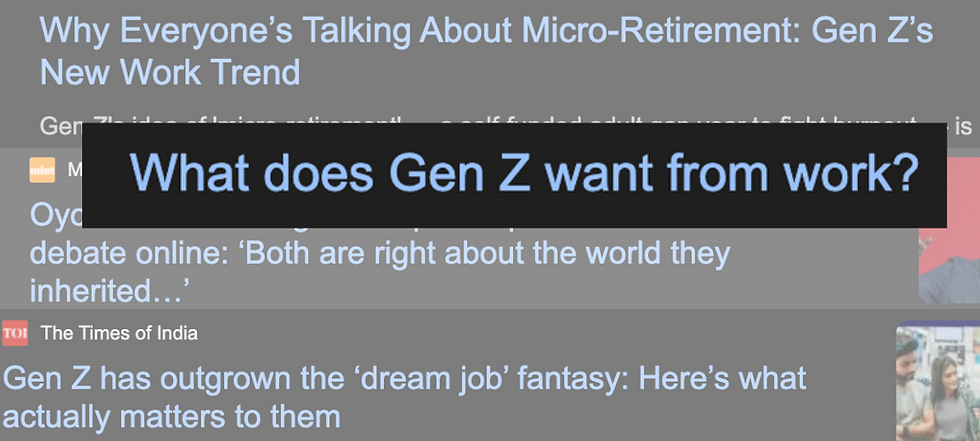
By 2030, Gen Z will make up 30% of India’s workforce. Born between 1997 and 2012, this generation is not just the future - they’re already shaping how companies hire, manage, and grow.
And here’s the opportunity: Gen Z brings energy, creativity, and a digital-first mindset that can transform workplaces - but only if employers understand what drives them.
Understanding Through Maslow’s Lens
Maslow’s hierarchy of needs helps explain why different generations behave differently at work.
Boomers (born 1946–1964) largely sought stability and financial security (basic and safety needs). A steady paycheck and long-term job loyalty fulfilled their priorities.
Millennials (born 1981–1996) shifted focus towards belonging, recognition, and self-actualization - they looked for purpose, culture, and balance.
Gen Z, however, has grown up in the internet era - with access, comparison, and rapid change shaping their worldview. This makes their needs for growth, validation, and meaningful work more intense and urgent. They aspire to self-actualization faster -seeking purpose, flexibility, and impact early in their careers.
Seen positively, Gen Z is not “impatient” - they’re ambitious and future-ready. They want to contribute meaningfully right now, not after 10 years of waiting.
A Generation With Global Power
OpenAI CEO Sam Altman recently remarked that “25-year-olds in Mumbai or Bengaluru have never had more power in the world.” This is a clear signal that Indian Gen Z professionals, with their tech skills, global exposure, and entrepreneurial drive, are stepping into positions of influence much earlier than previous generations.
For employers, this means Gen Z is not just part of the workforce - they’re reshaping the future of work itself.
1. They Value Purpose Over Paycheck
Gen Z doesn’t just want a job - they want to work for organizations that stand for something. Deloitte’s 2024 Gen Z survey shows that over 60% of them prefer employers aligned with their values. If your company culture feels transactional, you’ll struggle to keep them.
What to Do: Clearly communicate your mission and social impact. Highlight how every role contributes to the bigger picture.
2. Flexibility is Non-Negotiable
For Gen Z, hybrid and remote work aren’t perks - they’re expectations. They grew up with digital tools, and they don’t see why “office presence” should define productivity.
What to Do: Offer flexible work models. Even in industries requiring physical presence, give flexibility in schedules, learning, and career progression.
3. They Demand Growth and Feedback
Gen Z wants real-time feedback and visible growth opportunities. If they don’t see progress, they’re quick to move on - job-hopping isn’t a stigma for them.
Create structured mentorship programs and shorter feedback loops. ZigMe’s Enable & Elevate framework focuses exactly on this - turning feedback into growth.
4. Technology is Their Language
Gen Z is the most tech-native generation. Outdated systems frustrate them. They expect seamless tech at work, just like the apps they use in daily life.
What to Do: Companies should invest in modern technology and AI tools - from smarter hiring platforms to digital collaboration systems - to create a seamless and efficient work environment.
5. Mental Health is a Priority
Unlike older generations, Gen Z openly talks about stress, burnout, and mental health. They look for workplaces where well-being is part of the culture, not just a wellness webinar once a year.
Build real support systems - counseling access, flexible policies, and managers trained in empathy.
What This Means for Employers
Engaging Gen Z is not about ping-pong tables or “casual Fridays.” It’s about building a workplace where they can:
See purpose in their work
Learn and grow continuously
Work flexibly
Use modern tools
Feel mentally supported
At ZigMe, we’ve seen this firsthand. Our work with Tier 2 & 3 colleges shows that job readiness + clear expectations keep Gen Z employees motivated from day one. As one of our student participants put it: “The interview prep made me confident, but what mattered most was knowing what success looked like in the role.”
Gen Z is not difficult; they’re different - in a good way. They are ambitious, value-driven, and digital-first. As Sam Altman’s observation shows, they hold unprecedented power and influence. Companies that embrace this positivity and adapt to their mindset will not just retain them but also unlock their creativity, innovation, and energy.


